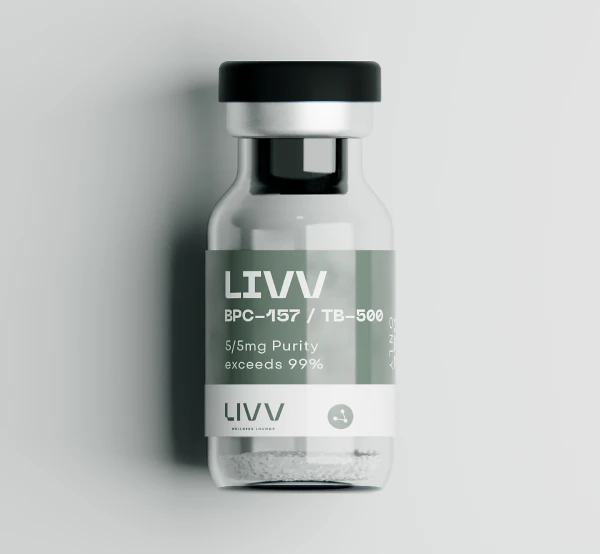
Batch: GF-BPCTB5-B241 BPC-157 Assay: 7.36 mg BPC-157 Purity: 99.2 percent BPC-157 Identification by RT: 0.995 Molecular Ion Mass Identification (BPC-157): 1418 Da TB-500 Assay: 6.11 mg TB-500 Purity: greater than 99.8 percent TB-500 Identification by RT: 0.996 Molecular Ion Mass Identification (TB-500): 4963 Da Bacterial Endotoxins: below 0.001 EU/mg Total Aerobic Microbial Count: Not detected Total Yeast and Mold Count: Not detected Research Applications In controlled laboratory environments, BPC-157 / TB-500 may be utilised in experimental models designed to investigate peptide signalling systems and molecular interaction pathways
Withdraw the prescribed volume (e.g., 0.25, 0.5, 0.75 or 1 mL) into a sterile syringe and inject subcutaneously in the abdomen, thigh, or upper arm after cleaning the site with alcohol
Since synergy demands a higher standard than simple overlap, its evaluation requires comparisons between combinations and individual peptides, standardized injury models, and predefined evaluation criteria (migration assays, histology, collagen organization, vascular markers, inflammatory markers, and functional metrics)
Use a 3 mL syringe with an appropriate subcutaneous needle (e.g., 2527G, inch) for doses above 1.0 mL
Understanding these causes is essential for appropriate clinical management and avoiding unnecessary alarm